
Can Perimenopause Be Diagnosed With a Blood Test? What FSH, AMH and Estradiol Can and Can’t Tell You
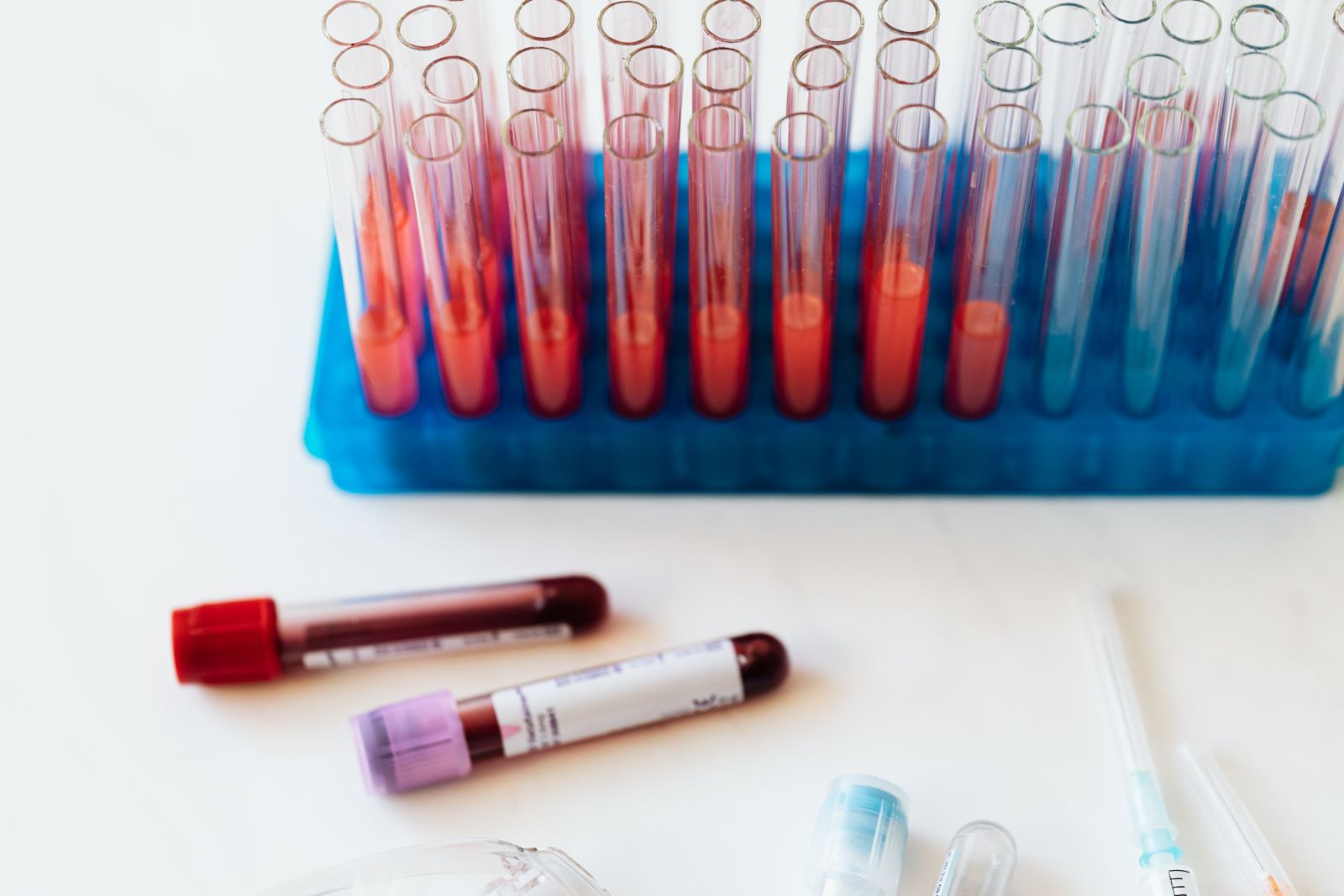
You go to the doctor because something has changed. Your cycle is shorter or more erratic, you wake at 3 a.m., your mood swings out of nowhere. A blood test is ordered, the results come back, and you hear the sentence so many women know by heart: “Everything is normal.” So can perimenopause be diagnosed with a blood test? For most women over 45 the honest answer is no, and that's not a failure of the lab. It's how the hormones of this phase behave.
This article explains why one FSH, AMH or estradiol result rarely answers the question “Am I in perimenopause?”, what current guidelines actually use instead, and which blood tests are still worth doing: not to confirm perimenopause, but to rule out the conditions that look just like it.
What perimenopause is, and why it's hard to “catch” on paper
Perimenopause is the transition before your final menstrual period. Menopause itself is a single point in time, usually confirmed in hindsight after 12 months without a period. The years leading up to it are defined by change, not by a stable new level.
That's the core of the problem. During the transition, the ovaries don't switch off smoothly. Hormone levels rise and fall, sometimes sharply, from one cycle to the next and even from one day to the next. A blood test is a snapshot of a single morning. In a phase defined by fluctuation, a snapshot can easily land on a “good day”.
What the guidelines say: after 45, no hormone test is needed
The UK national menopause guideline, NICE NG23 (current edition April 2026), is unusually direct here. For otherwise healthy women aged 45 and over, it recommends diagnosing perimenopause without laboratory tests: based on recent-onset vasomotor symptoms, such as hot flushes and night sweats, together with changes in the menstrual cycle.
It then goes a step further and advises against using the following to diagnose perimenopause or menopause in women 45 and over:
- anti-Müllerian hormone (AMH);
- inhibin A and inhibin B;
- estradiol;
- antral follicle count and ovarian volume on ultrasound.
FSH (follicle-stimulating hormone) has a narrower role. According to NICE, it's worth considering in women aged 40–45 with symptoms and cycle changes, and in women under 40 when premature ovarian insufficiency is suspected. Even then, one test isn't enough: premature ovarian insufficiency is diagnosed on two samples taken 4–6 weeks apart.
As Tatiana puts it, in that situation you weren't given the wrong test. You were given a test that, at your age, “doesn't answer the question being asked”. A normal result doesn't disprove your symptoms. It simply gives no answer.
Why one FSH result is unreliable
The full NICE guideline explains the reasoning in one line: FSH levels in perimenopause fluctuate considerably over short periods of time, varying in the same woman over a period of a few days. A single measurement, taken in isolation, is unreliable for any diagnosis.
What the numbers show
A US national study (NHANES, 576 women aged 35–60) compared FSH in women before the transition, during it and after menopause. The averages looked neatly different: 7.0, 21.9 and 45.7 mIU/mL. But the ranges overlapped heavily.
- Using a cut-off of 13 mIU/mL to separate “before the transition” from “in the transition” gave a sensitivity of 67.4% and a specificity of 88.1%. In plain terms, roughly one in three women who are already in the transition would be missed.
- Using 45 mIU/mL to separate the transition from postmenopause gave a sensitivity of 73.6% and a specificity of 70.6%.
The authors' conclusion: FSH on its own has limited value for telling the reproductive stages apart.
Normal FSH is part of the definition
STRAW+10, the international staging system for reproductive ageing, describes the late transition, the stage when hot flushes usually begin, as a time of extreme hormonal fluctuation, when FSH can be in the menopausal range one time and in the range typical of earlier reproductive years the next. In other words, a normal FSH is one of the expected findings in the very stage when many women feel worst.
STRAW+10 also states that menstrual cycle criteria remain the most important, while biomarkers are supportive and should not be treated as required for diagnosis. The SWAN study confirmed this directly: a single FSH value was less predictive of menopausal stage than any of four bleeding-pattern criteria. Tatiana's summary: “The cycle calendar beats the test tube.”
What about AMH, the “ovarian reserve” test?
AMH does reflect ovarian reserve, and it does predict the timing of the final period. The question is how precisely. The largest study, SWAN (1,537 women, average age 47.5, with repeated blood samples), looked at women with AMH below 10 pg/mL and the chance that their final period would come within the next 12 months:
- 51% in women under 48;
- 63% in women aged 48–51;
- 79% in women over 51.
Under 48, that's close to a coin toss, and the same result means something different depending on age. The reverse works better: AMH above 100 pg/mL fairly reliably meant periods would not stop within the next year (negative predictive value 90–97%).
Two caveats matter. A 2023 systematic review concluded that AMH is useful for population research on the age of menopause, but its diagnostic use in an individual patient hasn't been properly studied. And the SWAN study used an ultra-sensitive research assay; commercial AMH tests aren't standardised against each other, so these numbers don't transfer automatically.
Most importantly, AMH answers “when will my periods end?”, not “are my symptoms today caused by perimenopause?”. These are different questions.
And estradiol?
Estradiol is on the NICE “do not use” list for women 45 and over for the same reason: in perimenopause it can be high, low or perfectly average depending on the day you happen to test. A single value adds context at best. It isn't a diagnosis.
So can perimenopause be diagnosed with a blood test? How it is really recognised
The diagnosis rests on three things: your age, your symptoms and how your cycle has changed. The cycle part is more concrete than many women realise. In STRAW+10 terms:
- a persistent difference of 7 days or more between consecutive cycles points to the early transition;
- a gap of 60 days or more without a period points to the late transition.
That's why a simple cycle calendar is real diagnostic data, not just a nice extra. A symptom diary is useful too, but mainly for you. Major guidelines don't recommend routine symptom scales in everyday practice. In the one randomised trial that tested symptom monitoring, physical symptoms fell by 42% versus 12% in controls, but monitoring didn't improve help-seeking, communication or medical decisions.
Which blood tests are actually worth doing
Tests are still useful, just with a different goal: not to confirm perimenopause, but to rule out conditions that mimic it.
- Thyroid (TSH). In a large screening study (25,862 people, median age 56), 9.5% had a raised TSH, and almost 10% had a thyroid problem that hadn't been recognised before. Symptoms couldn't tell thyroid disease apart from menopause, so a blood test is the only way.
- Iron stores (ferritin) and a full blood count if bleeding has become heavier or longer. In a group of women with heavy periods, 90% had ferritin below 30 µg/L and 27% had anaemia. Iron deficiency can exist with a normal haemoglobin.
- Sleep apnoea, if there is snoring, pauses in breathing, early waking and fatigue that nothing fixes. Postmenopause is associated with higher odds of sleep apnoea, but the popular claim that “half of postmenopausal women” have it is not supported.
- Mood. In SWAN the odds of depressive symptoms were higher in perimenopause, but two or more stressful life events raised them far more than menopausal stage did. Not everything that happens at 48 comes from the ovaries.
- Vitamin D is reasonable to check, without turning the result into a drama.
Several of these tests are covered in more detail in our guide to 7 lab tests women over 45 should check when “everything is normal”. If you're also wondering about falling energy or libido, note that androgens follow a different curve: a slow drift that starts long before menopause, which is why testosterone shouldn't be interpreted in isolation in women.
Red flags you should never put down to perimenopause
- Any bleeding after 12 months without a period. In a meta-analysis of 40,790 women, endometrial cancer was found in 9% of women with postmenopausal bleeding, and 91% of endometrial cancers showed up this way.
- Any abnormal uterine bleeding at 45 or older. ACOG lists endometrial biopsy as a first-line test here.
- Persistent bleeding between periods.
- Unscheduled bleeding on hormone therapy that starts more than 6 months after beginning treatment, or more than 3 months after a change of product or dose.
- Anaemia. A full blood count is essential with heavy periods.
Frequently asked questions
Can perimenopause be diagnosed with a blood test?
In women 45 and over, usually not. NICE recommends diagnosing perimenopause from symptoms and cycle changes, without laboratory tests, because hormone levels fluctuate from day to day.
Is an FSH test useful in perimenopause?
Its role is limited. NICE suggests considering FSH at 40–45 with symptoms and cycle changes, and under 40 if premature ovarian insufficiency is suspected, confirmed by two samples 4–6 weeks apart.
Can an AMH test tell me if I'm in perimenopause?
No. AMH helps estimate when periods may stop, with accuracy that depends on age, but it doesn't show whether current symptoms are due to perimenopause.
Which blood tests make sense if I have perimenopause symptoms?
Tests that rule out look-alike conditions: thyroid function, ferritin and a full blood count if bleeding is heavy, and, when relevant, an assessment for sleep apnoea. Which tests you need is decided with your doctor.
My hormone tests are normal, but I have symptoms. What now?
A normal result doesn't cancel your symptoms. In Tatiana's words, a symptom that disrupts your life is a reason to talk about treatment, whatever the lab report says.
The bottom line
“Your tests are normal” after 45 usually doesn't mean “you're fine” or “you imagined it”. It means the test was asked a question it can't answer. Perimenopause is recognised by age, symptoms and cycle changes; blood tests are there to rule out its look-alikes and to catch what isn't menopause at all. If the next question is whether it's time for hormone therapy, see when to start HRT.
If you'd like to make sense of your symptoms, cycle and lab results together, you can book a strategic session with Tatiana.
Sources
- NICE NG23. Menopause: identification and management (updated 15 April 2026), recommendations 1.3.1, 1.3.4–1.3.6, 1.7.2–1.7.4. nice.org.uk/guidance/ng23
- NICE NG23, full guideline, chapter 5. ncbi.nlm.nih.gov/books/NBK343466
- Henrich JB et al. Limitations of follicle-stimulating hormone in assessing menopause status: NHANES 1999–2000. Menopause 2006. PubMed 16645530
- Harlow SD et al. Executive summary of STRAW+10. J Clin Endocrinol Metab 2012. PubMed 22344196
- Randolph JF Jr et al. The value of FSH concentration and clinical findings as markers of the late menopausal transition. JCEM 2006. PubMed 16720656
- Finkelstein JS et al. Antimüllerian hormone and impending menopause in late reproductive age: SWAN. JCEM 2020. academic.oup.com
- Nelson SM et al. Anti-Müllerian hormone for the diagnosis and prediction of menopause: a systematic review. Hum Reprod Update 2023. PubMed 36651193
- Canaris GJ et al. The Colorado thyroid disease prevalence study. Arch Intern Med 2000. PubMed 10695693
- Mintziori G et al. EMAS position statement: thyroid disease and menopause. Maturitas 2024. PubMed 38658290
- Paramsothy P et al. Bleeding patterns during the menopausal transition: SWAN. BJOG 2014. PubMed 24735184
- Munro MG et al. Heavy menstrual bleeding, iron deficiency and iron deficiency anemia. Am J Obstet Gynecol 2023. PubMed 36706856
- Young T et al. Menopausal status and sleep-disordered breathing: Wisconsin Sleep Cohort. Am J Respir Crit Care Med 2003. PubMed 12615621
- Mirer AG et al. Sleep-disordered breathing and the menopausal transition. Menopause 2017. PubMed 27760083
- Dancey DR et al. Impact of menopause on the prevalence and severity of sleep apnea. Chest 2001 (sleep-clinic sample). PubMed 11451831
- Bromberger JT et al. Depressive symptoms during the menopausal transition: SWAN. J Affect Disord 2007. PubMed 17331589
- Andrews RAF, John B, Lancastle D. Symptom monitoring improves physical and emotional outcomes during menopause: RCT. Menopause 2023. PubMed 36727773
- Clarke MA et al. Association of endometrial cancer risk with postmenopausal bleeding. JAMA Intern Med 2018. PubMed 30083701
- ACOG Committee Opinion No. 557: endometrial biopsy as a first-line test for abnormal uterine bleeding over 45. PubMed 23635706
- Pennant ME et al. Premenopausal abnormal uterine bleeding and risk of endometrial cancer. BJOG 2017. PubMed 27766759
- Manley K et al. Management of unscheduled bleeding on HRT: joint guideline. Post Reprod Health 2024. PubMed 38743767
- Davison SL et al. Androgen levels in adult females: changes with age, menopause, and oophorectomy. J Clin Endocrinol Metab 2005. PubMed 15827095
- Educational background: Women's Health and Wellness Program, Harvard Medical School Executive Education.
This article is for educational purposes only and does not replace medical advice. Decisions about testing and treatment are made individually, with your doctor.

Apply for a Strategic Session
A short application. I will reply personally within 1–2 working days.